MIC Research Building, University of MünsterMünster, Germany
Biomedical research in a sculptural brick building in Münster
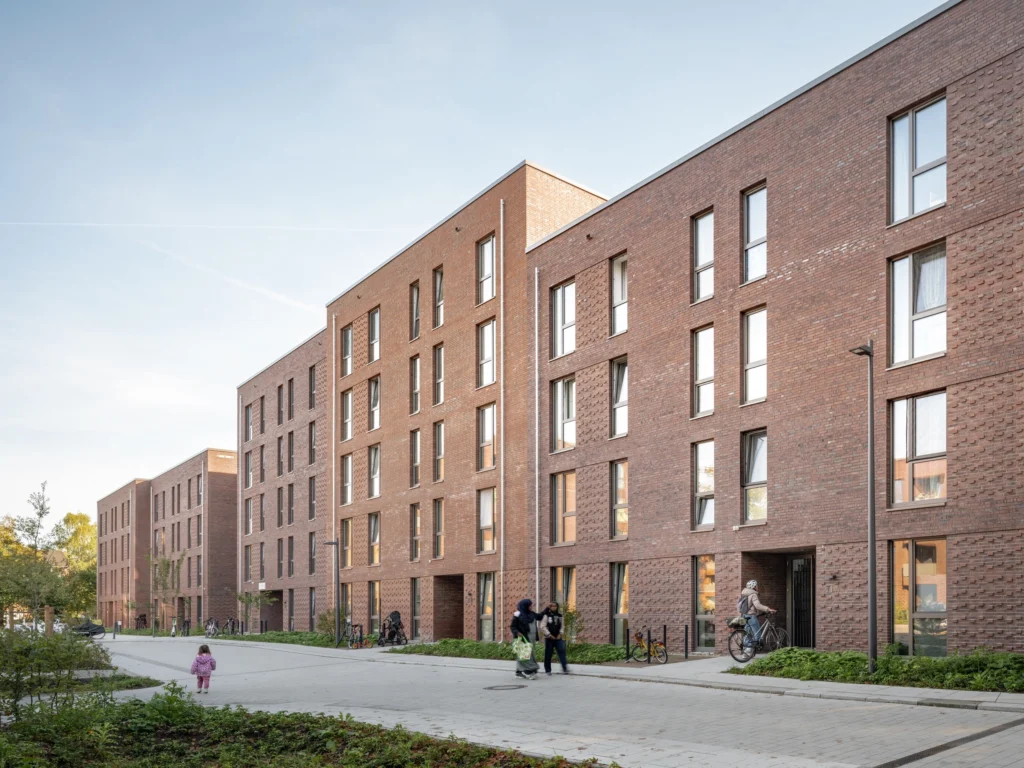
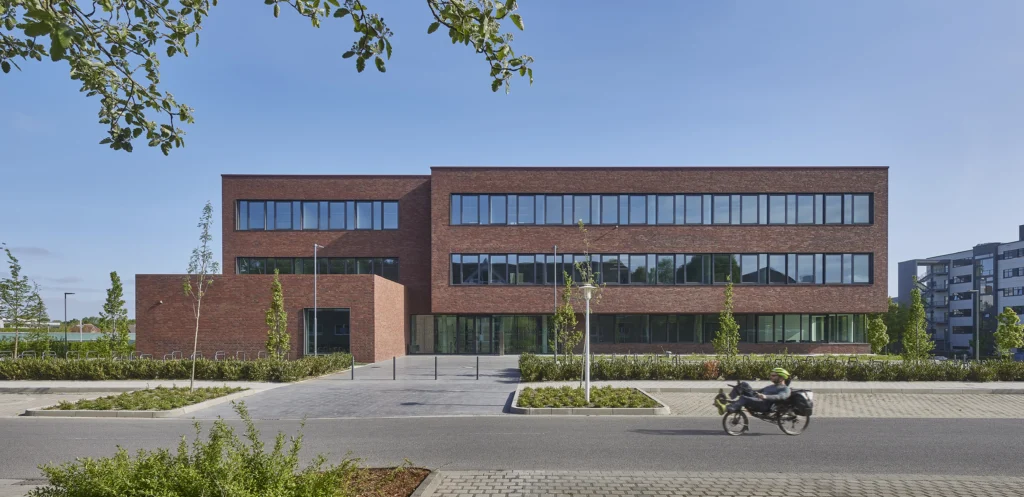
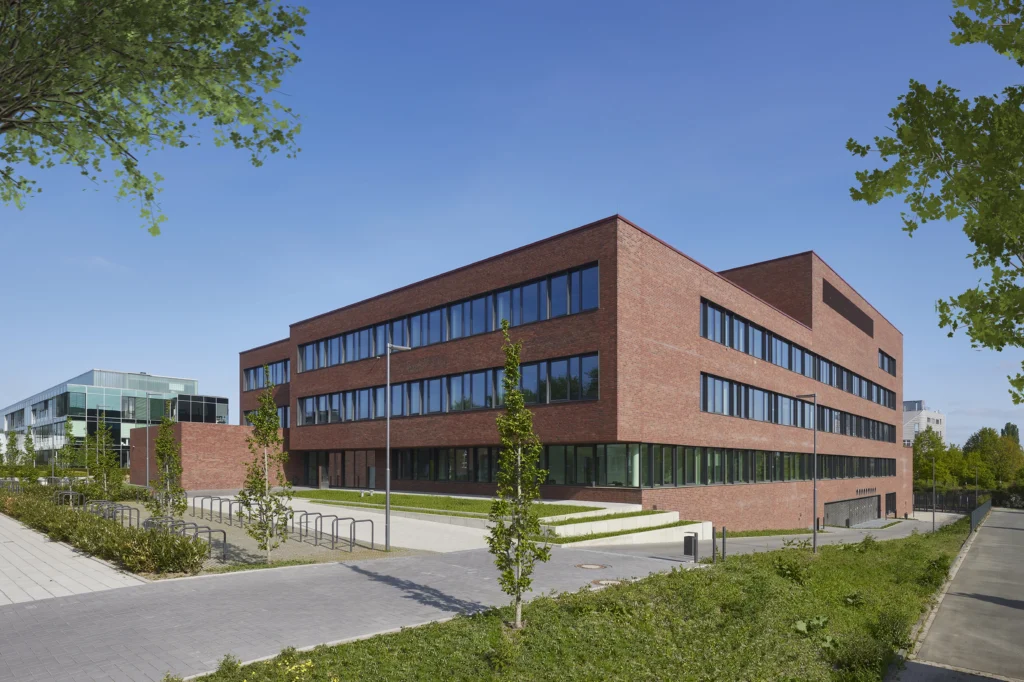
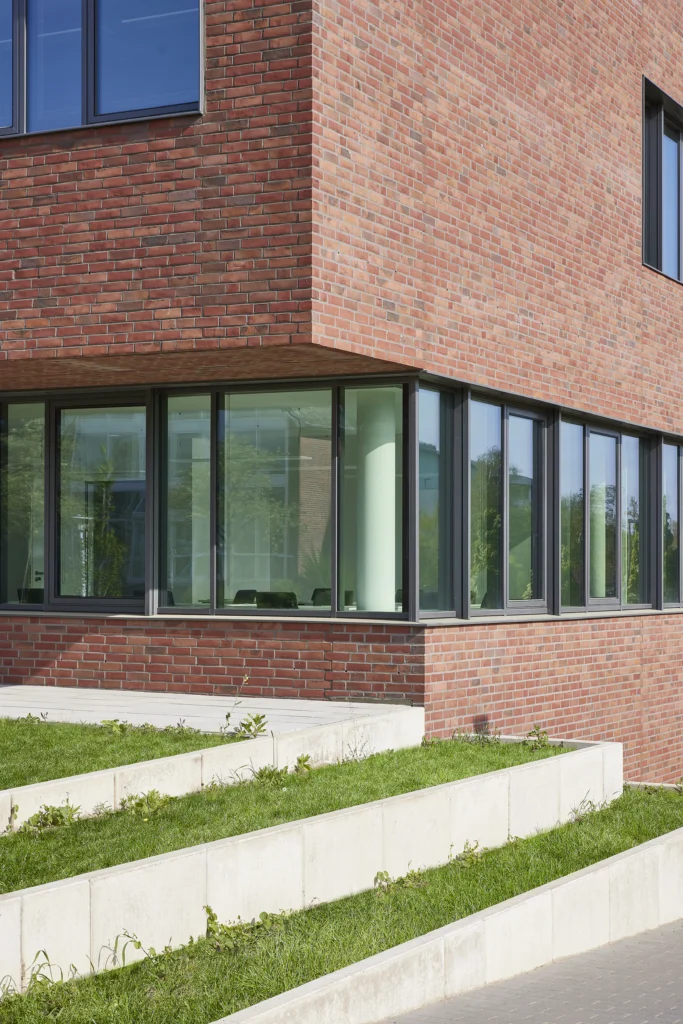
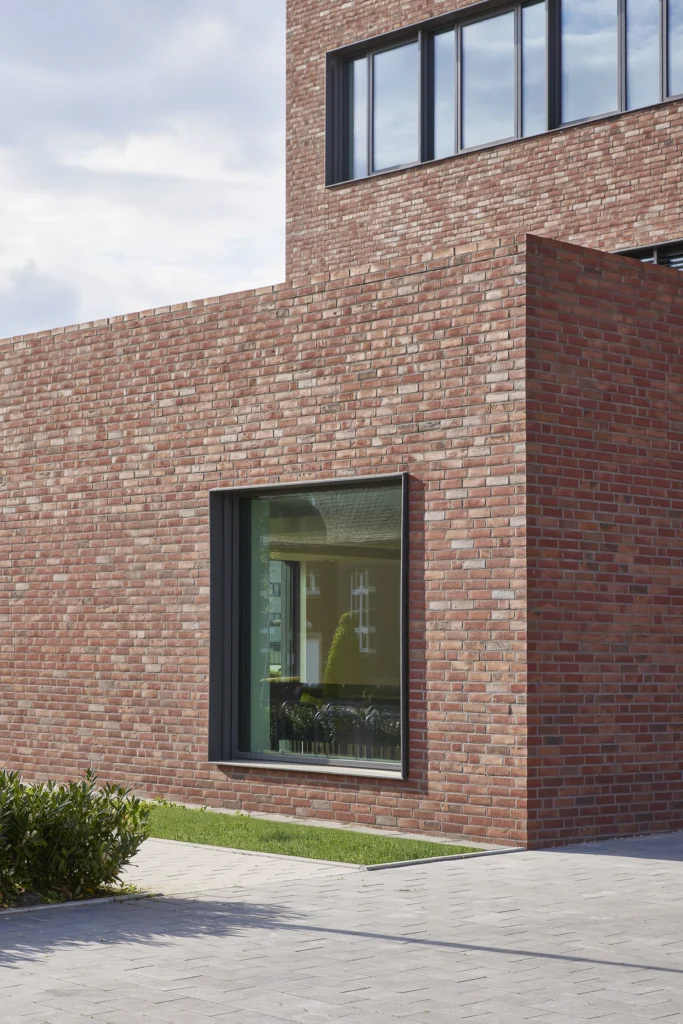
The Multiscale Imaging Centre (MIC) in Münster consolidates biomedical imaging techniques for the collaborative research of around 200 scientists from various disciplines. With its brick facade, the compact structure adopts the materiality and coloring of the neighboring existing buildings. Recessed and protruding volumes, along with individual ribbon windows, simultaneously give it an independent, sculptural expression. The site gradient of 4.50 meters is integrated into the building structure and shapes the various elevations. A protruding seminar cube and a long recess in the facade mark the entrance.
Project Overview
Location
Münster, Germany
VgV without Design
Award
Construction Period
2017 – 2022
Area (GFA)
13,063 m²
Size (GV)
54,788 m³
Three functional zones between the courtyard and special laboratory
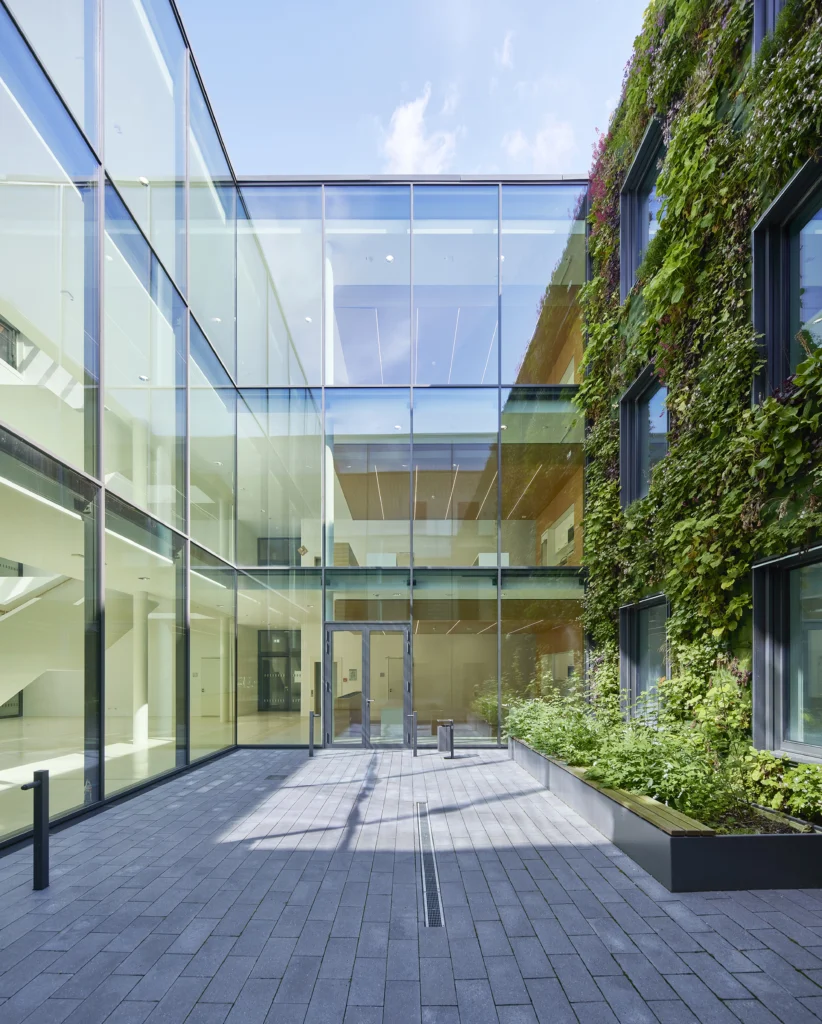
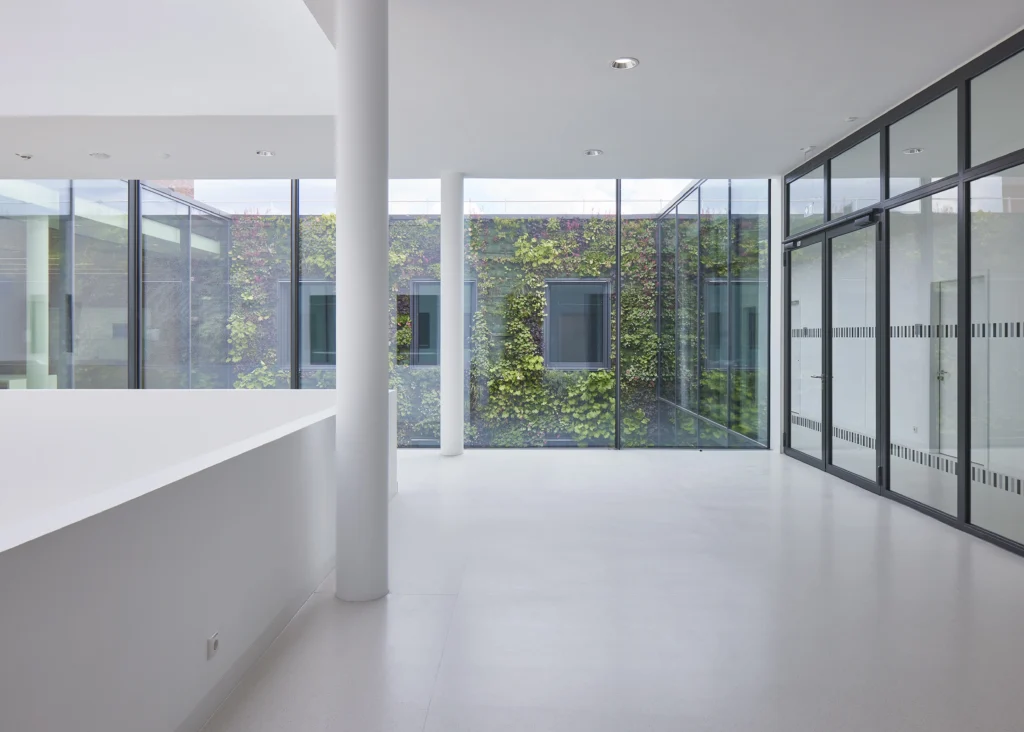
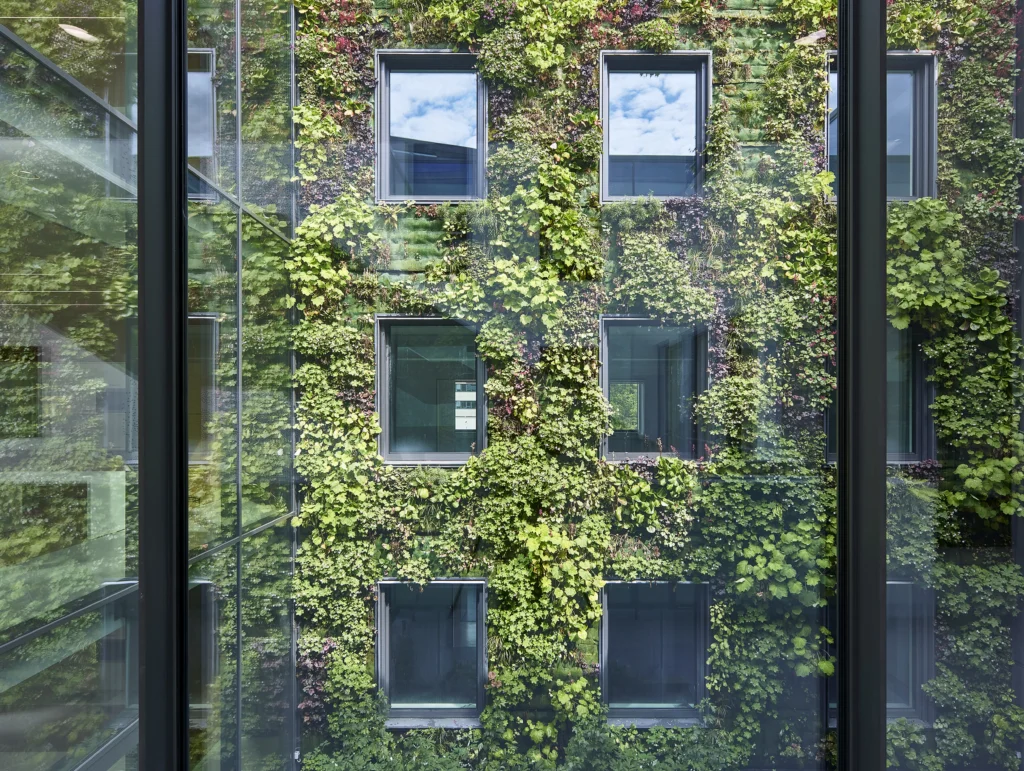
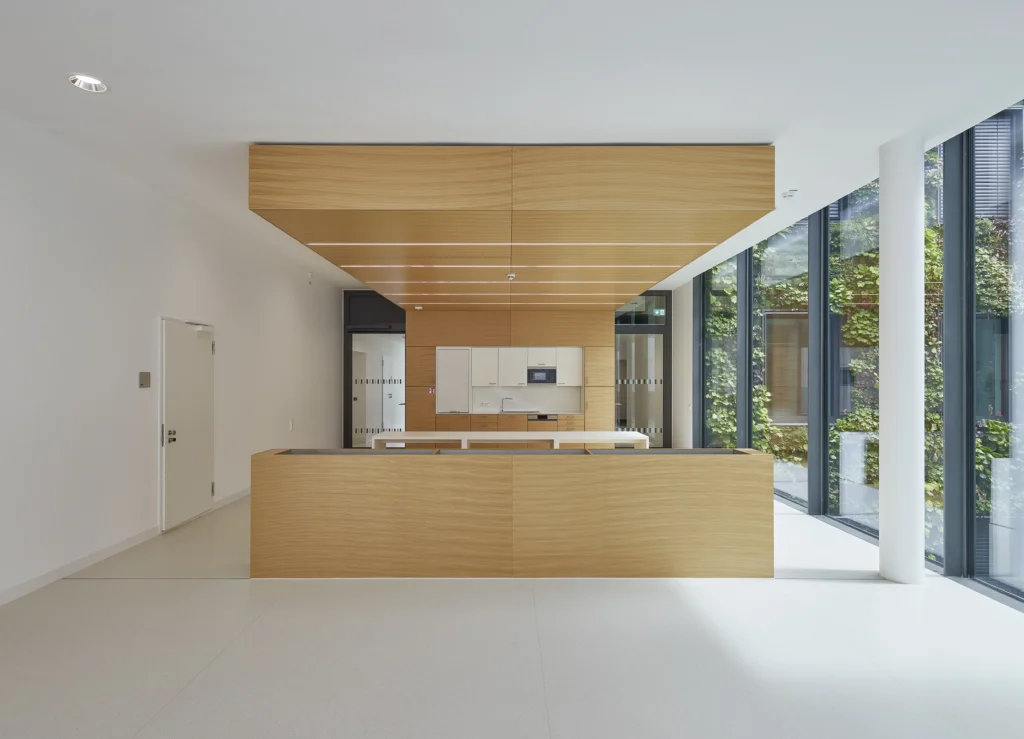
Inside, three functional zones organize the different uses. The starting point is a glass-covered foyer, from which diagonal open staircases provide access to the standard floors. Office and seminar rooms are arranged in a U-shape around an inner courtyard, which is visible through large glass surfaces. On its fourth side, a hanging garden extends across the entire height. In the center of the building are connected laboratory landscapes with documentation areas on the facade side and internal auxiliary rooms. The northern area accommodates special functions: animal housing and experiments, microscopy, and workspaces for handling radioactive material. The cyclotron and the radionuclide area are located in the basement.
Precise spatial conditions for sensitive imaging
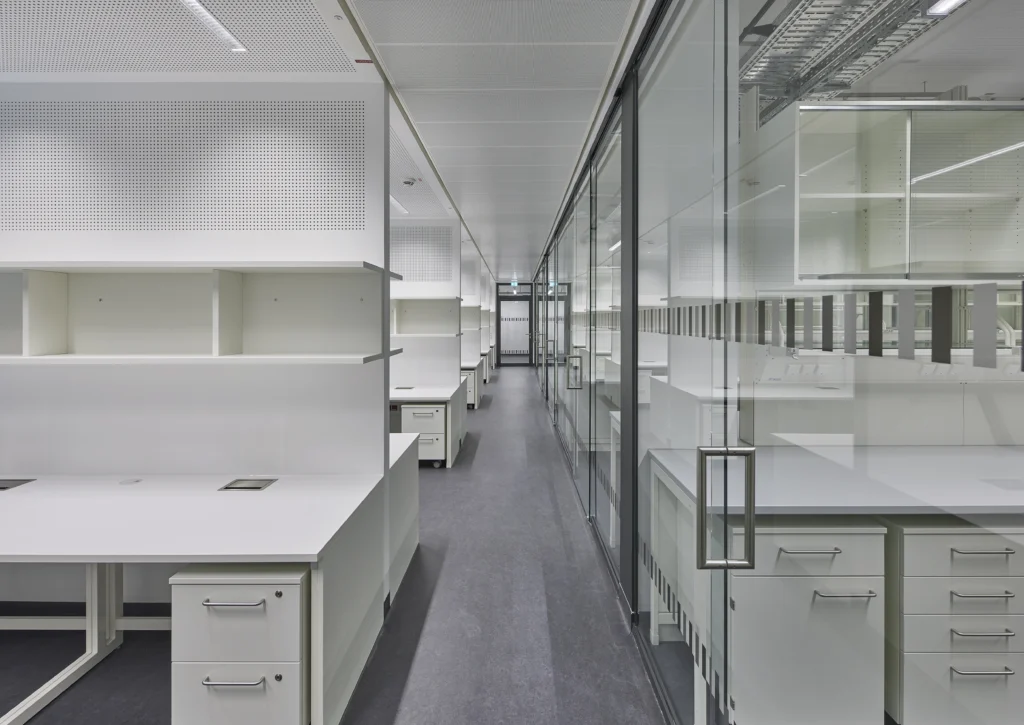
Around 4,300 square meters of laboratory space provide room for technologically demanding research. The specialized uses with safety levels S1 and S2 require differentiated structural and technical precautions. Vibration-decoupled foundations protect sensitive equipment from tremors, while special concrete is used for radiation shielding. Ventilation, temperature control, precision cooling, and steam supply are tailored to the respective research conditions. The highly sensitive microscopes, in particular, place high demands on room conditioning and vibration decoupling. Appropriately designed flood and inundation protection complements the safety measures.