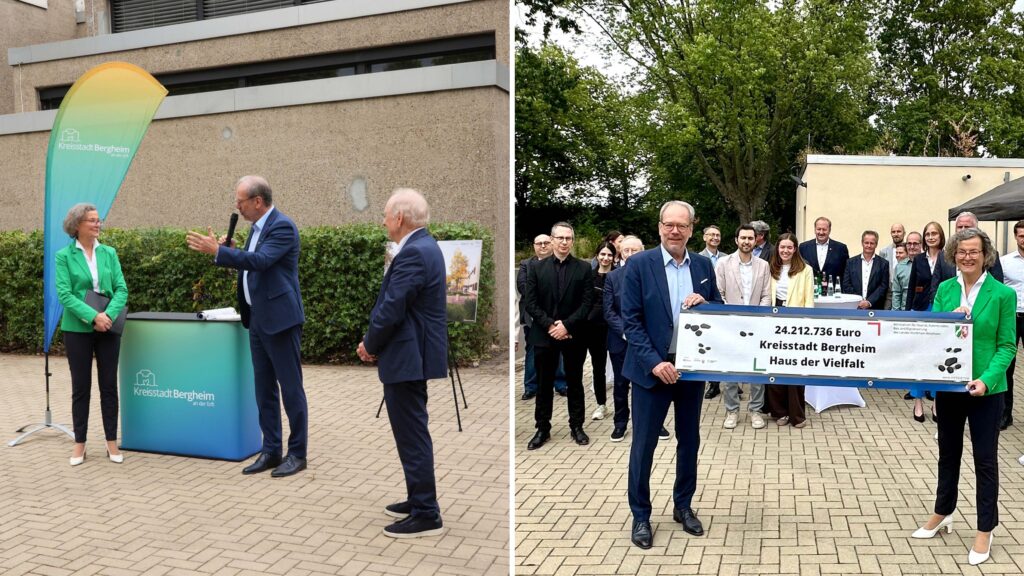
Together with Gerber Architekten, the former Paulusschule in Bergheim-Niederaußem is being transformed into an open, barrier-free and multifunctional building. The project brings together a range of educational, cultural, social and integration-focused uses within a shared spatial framework, creating a place of renewed civic significance for the district. At its core is the transformation of the existing building into a clearly structured and flexibly usable environment that combines openness, orientation and quality of stay.
An important milestone for the realization of the project has now been reached with the official handover of the funding approval. Ina Scharrenbach, Minister for Regional Identity, Local Government, Building and Digitalization of the State of North Rhine-Westphalia, presented the approval notice to Mayor Volker Mießeler. The State of North Rhine-Westphalia is supporting the Haus der Vielfalt with approximately €24.2 million, thereby providing a substantial foundation for the next stages of implementation.
At the same time, the project forms part of the broader structural transformation of the Rhenish mining region and is guided by a consistent commitment to sustainability. Planned measures include the building’s energy-efficient refurbishment, green roof areas, a photovoltaic system and the unsealing of external surfaces. Construction is scheduled to begin in 2026.
Picture: © Kreisstadt Bergheim
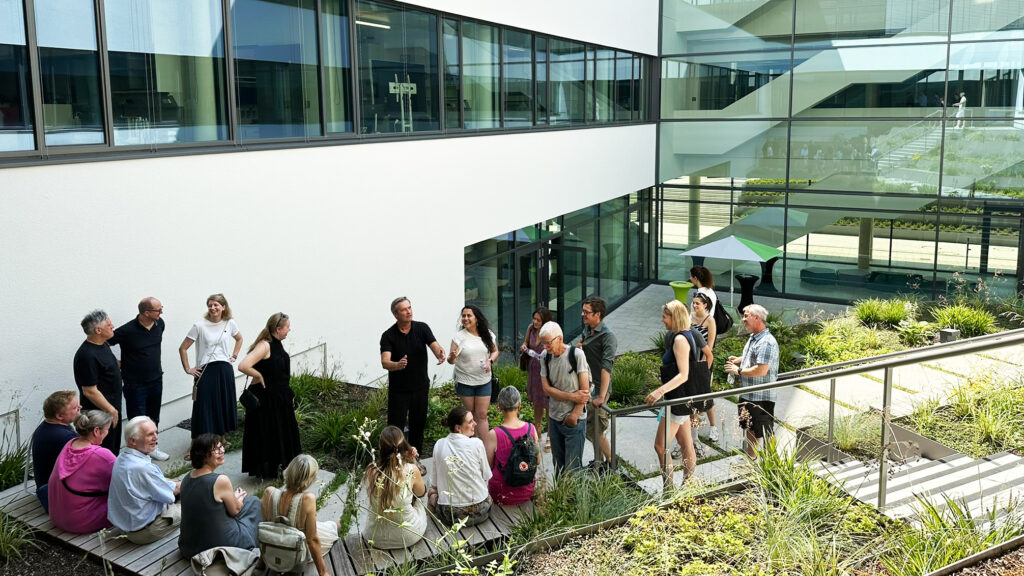
This year we once again took part in Architecture Day 2026, opening two projects that are normally not accessible to the public: the CALEDO research building at TU Dortmund University and the New Officers’ School in Roth.
Across both sites, many visitors took the opportunity to experience the architecture first-hand and walk through the buildings. What stood out most was the quality of exchange: focused questions, honest feedback, and conversations that went beyond surface-level impressions into planning, use, and architectural intent.
The project leads Mr. Haake, Mr. Bleszynski, Mr. Grimm, Mr. Halbeisen, and Mr. Kraus guided the tours and shared insights into design decisions, development, and realisation. In Dortmund, the tours were carried out together with BLB, Ms. Engbers, and Mr. Brandenbusch from CALEDO, whose input added valuable context and depth to the discussions on site. In Roth, the tours were organised in cooperation with the State Building Authority, Mr. Hess, Ms. Buttolo, the base command of the German Air Force, and Mr. Zobel from the Bavarian State Construction Directorate.
Our sincere thanks go to our clients and building users for making it possible to open these buildings to the public in the first place and enable this level of insight.
Thank you to everyone who visited for your interest, your questions, and the conversations that made the day what it was.
Picture: © Gerber Architekten; Tour: CALEDO research building at TU Dortmund University
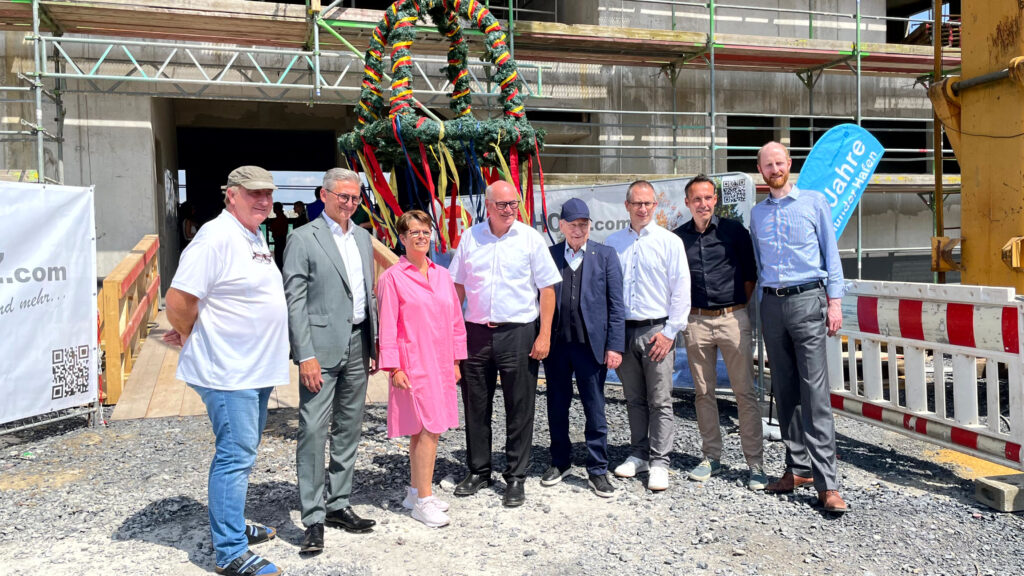
The new building will not only provide a new base for administration and technical operations directly on the waterfront – it is also part of a broader transformation currently shaping Dortmund Port. Here, industrial activity, urban development and new future perspectives are coming together.
In this distinctive setting, the new port administration building is a visible marker of change. It consolidates key functions, strengthens the site and supports the port’s ongoing development into a future-oriented workplace and infrastructure hub.
After an intensive planning process, we are very excited to celebrate this important milestone and would like to thank everyone involved for their trust, dedication and collaborative spirit.
Photo: © Gerber Architekten / from left to right: Mr Hölter, Rundholz; Jörg Jacoby, Chairman of the Executive Board of Dortmunder Stadtwerke AG (DSW21); Alexandra Reinbach, Dortmunder Hafen 21; Mr Rundholz; Prof. Eckhard Gerber; Benjamin Sieber, Gerber Architekten; Rolf Mertens, Gerber Architekten; Dr Jendrik Suck, Chairman of the Supervisory Board
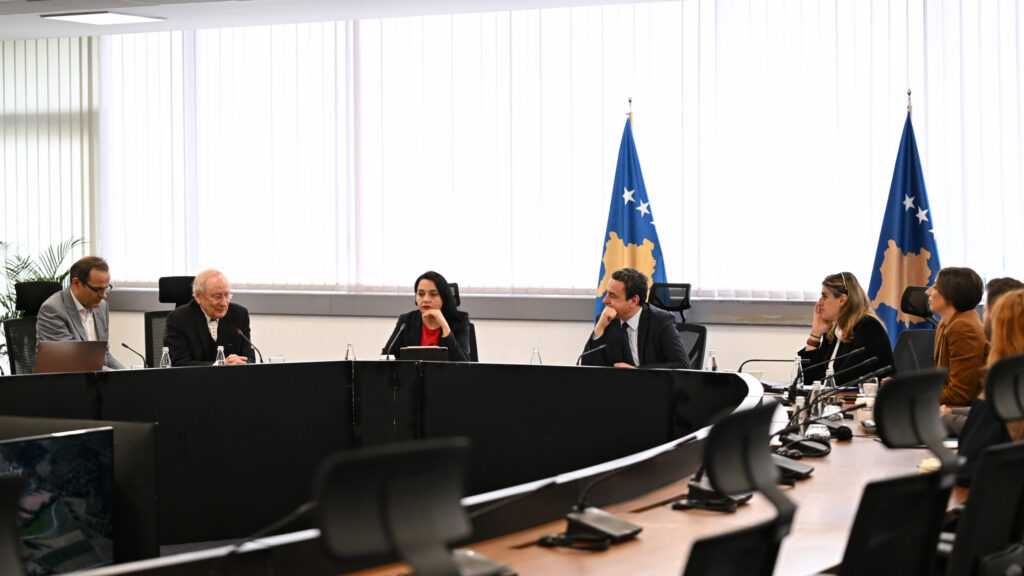
Prof. Eckhard Gerber and Thomas Lücking were on site in Kosovo to present the current progress of the master plan for the Adem Jashari Memorial Complex in Prekaz, together with representatives of the Republic of Kosovo and in the presence of the incumbent Prime Minister Albin Kurti. The Prime Minister described the project as one of the country’s most important initiatives for historical memory, cultural heritage, and national identity, and emphasized the particular significance of Prekaz in the collective memory of the population.
During the meeting, the next concrete steps were presented. The conservation projects for the so-called “Towers of Resistance” are expected to be completed later this year. This marks the transition from the planning phase to on-site construction and conservation work. This progress represents an important milestone for the overall project.
The design by Gerber Architekten was awarded first prize in the international competition. The aim of the master plan is not only to preserve history, but to make it experientially accessible in space and to communicate it to future generations.
The former munitions factory will be transformed into a national museum of resistance. The historic houses of the Jashari family will be preserved within symbolic glass structures and made visible as part of the collective memory. The ensemble will be complemented by new pathways, places for gathering, and a viewing platform in the existing water tower, offering panoramic views of the Prekaz landscape.
The project brings together architecture, memory, and education into a cohesive ensemble that makes the past visible while also creating a space for encounter and reflection.
© Office of the Prime Minister of Kosovo (Zyra e Kryeministrit)
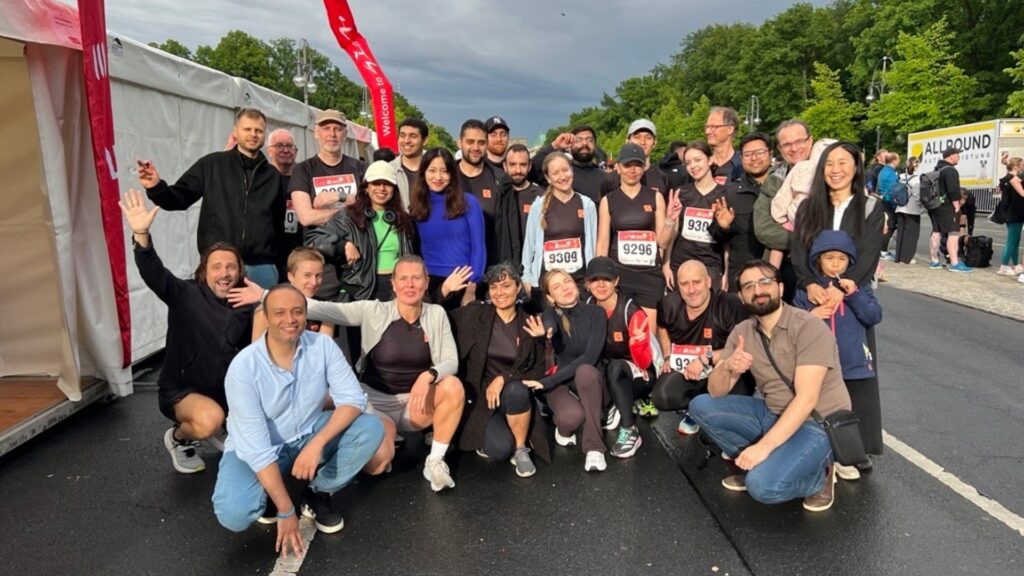
On May 20, our Berlin office joined the IKK BB Berlin Corporate Run, taking on the 5.5 km course through the centre of the city with energy, team spirit, and a great atmosphere. Starting at the Brandenburg Gate, the route followed Straße des 17. Juni, passed through the Tiergarten, and returned to the starting point.
We are delighted to see our Berlin team taking part with such enthusiasm and sporting commitment. A wonderful reflection of motivation, engagement, and shared moments beyond the everyday workplace.
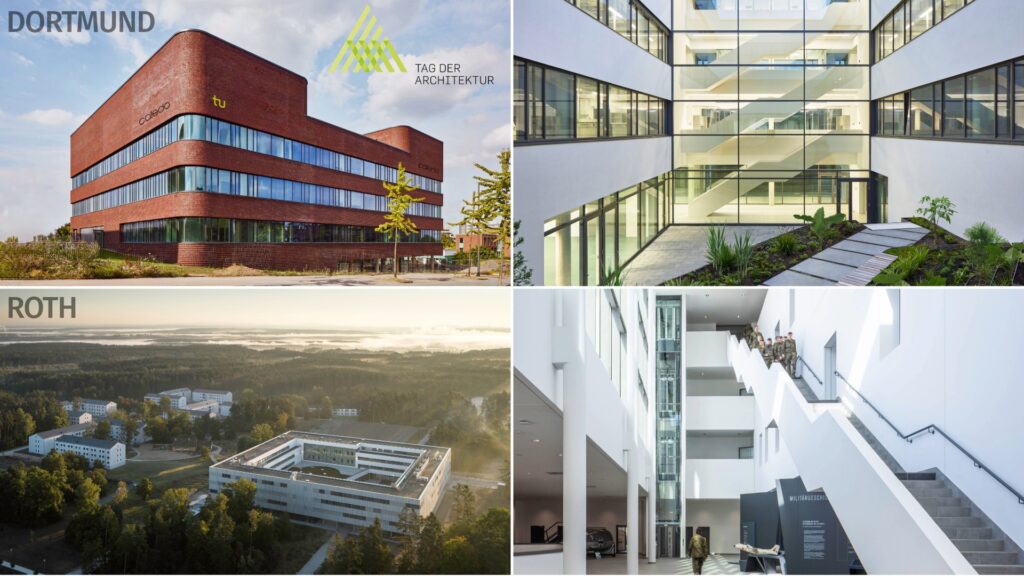
This year as well, we are taking part in Architecture Day. Visitors will have the opportunity to explore two completed projects that are otherwise not open to the public. On site, our project leaders will provide exciting insights into the development, design, and realization of the buildings and show how architecture moves from planning to built form.
The research building CALEDO at TU Dortmund will be open on Saturday, 27/06/2026, with guided tours at 10:00 and 11:00.
The meeting point is the main entrance at Otto-Hahn-Straße 10, 44227 Dortmund.
The new Officer School with teaching building and accommodation for the Air Force in 91154 Roth can be visited on Sunday, 28/06/2026, from 14:00 to 16:00.
Please note that participation is limited to 20 people and registration by 22/06/2026 is mandatory via architektouren@stban.bayern.de.
The visit is free of charge and offers a unique opportunity to gain deeper insight into the ideas, planning processes, and architectural approaches behind the projects. Further information is available on the websites of the respective chambers of architects of the federal states.
Photos:
CALEDO Research Building ©Jürgen Landes
New Officer School in Roth ©HGEsch
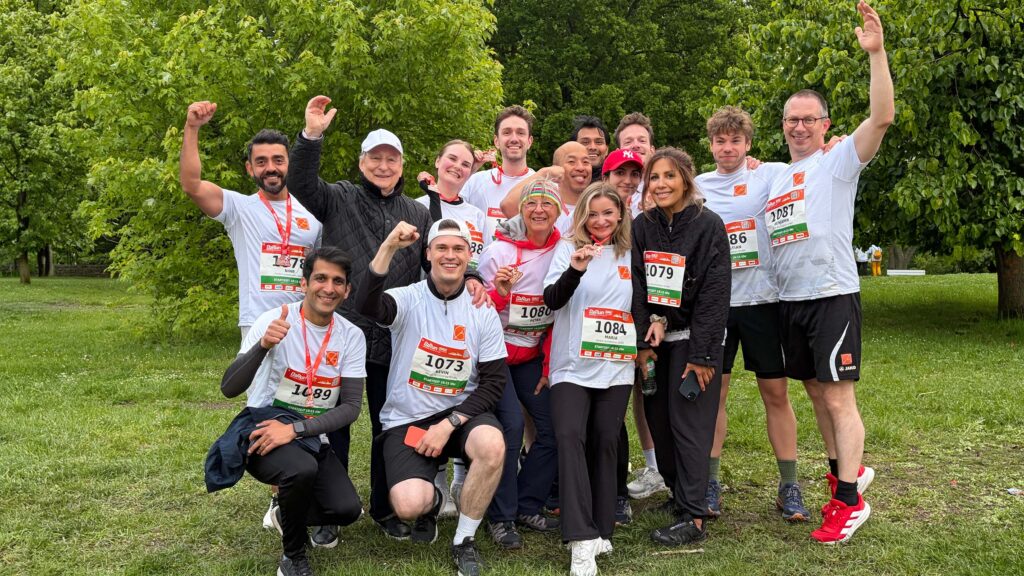
Our colleagues from Dortmund, Münster, and Düsseldorf ran the 6 kilometers together, showing strong team spirit, great energy, and plenty of motivation. Our managing directors, Eckhard Gerber and Benjamin Sieber, were also on site and supported the team. Especially noteworthy: by taking part, we were able to support the organization Menschen für Menschen. So the run was not only a sporting highlight but also served a social purpose.
Afterwards, we wrapped up the evening together with good food and cold drinks – the perfect opportunity to reflect on the run as a group.
Thanks to everyone who took part. We’re already looking forward to next year.
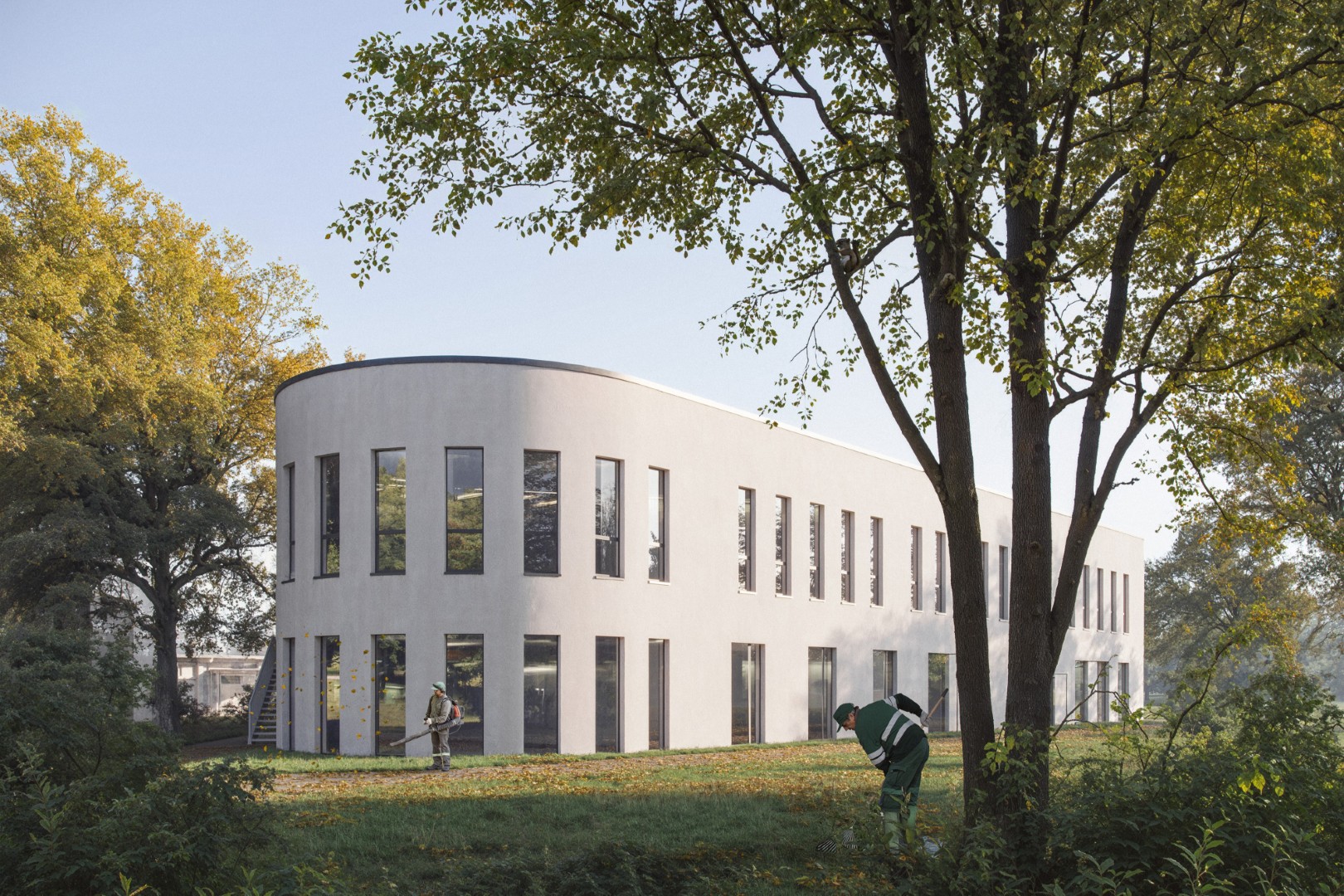
On May 7, 2026, the groundbreaking ceremony marked the official start of construction for the new therapy center at Klinik Eichholz in Bad Waldliesborn.
The approximately 2,500 square meter new building is being developed as an extension of the existing clinic ensemble at the current main entrance. The two-story structure will consolidate key therapy functions in one location, including a rehabilitation pool, therapy and group areas, as well as facilities for outpatient and day-care treatments. The compact layout will improve workflows and provide clearer orientation for patients.
The design by Gerber Architekten follows an organic architectural language that integrates sensitively into the surrounding park landscape. The precise positioning of the building minimizes the impact on the environment while creating a clear spatial addition to the existing structures. A transparent connecting corridor forms the new entrance and links the existing and new buildings into a cohesive functional and architectural unit.
Construction is being carried out while the clinic remains in operation, requiring temporary adjustments to access and circulation – a particular challenge for both planning and construction.
We look forward to the realization and completion of the project for the client Gesundheitszentrum in Bad Waldliesborn GmbH, with whom another project in the field of healthcare architecture is being delivered.