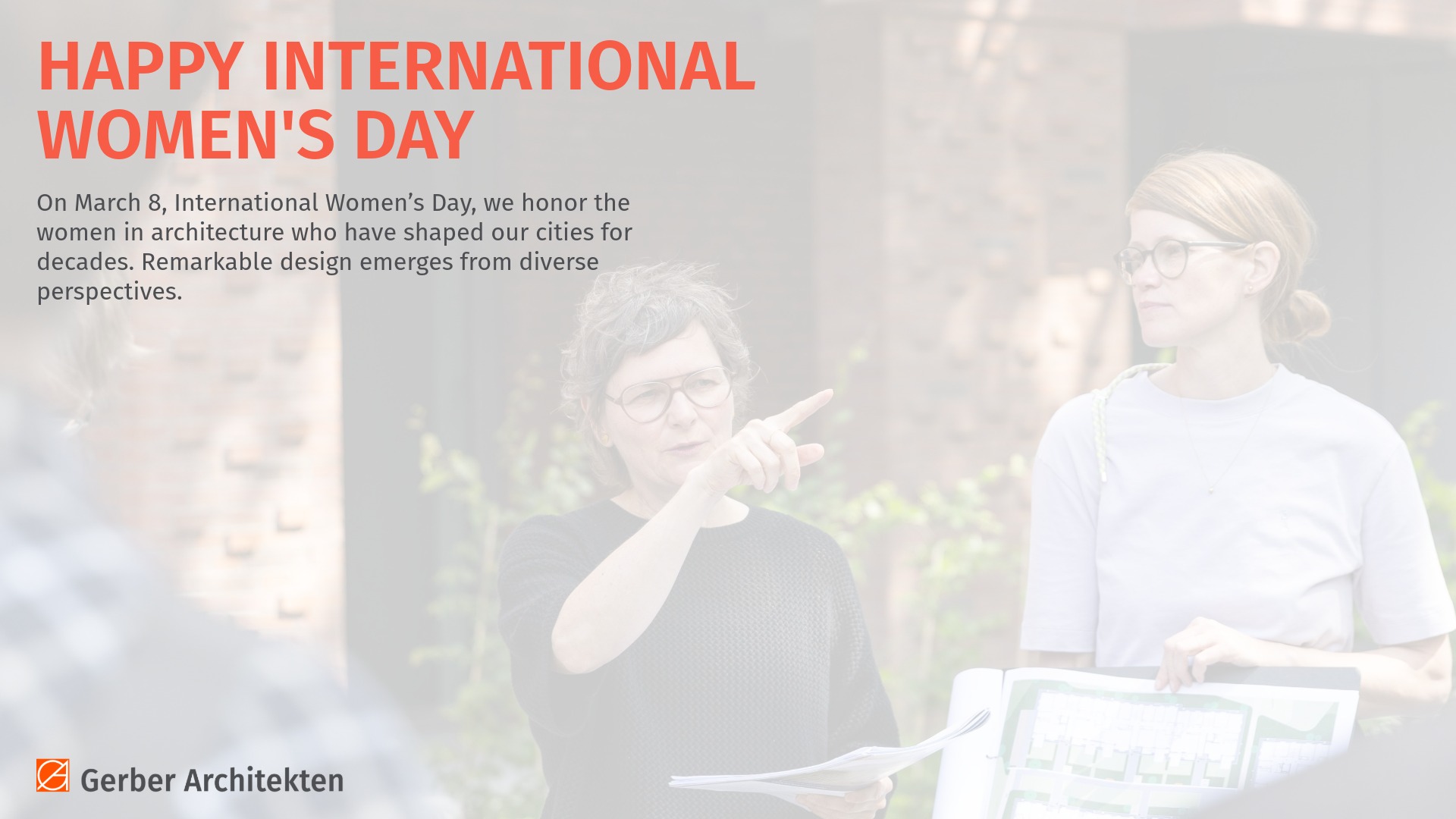
On International Women’s Day, March 8, we celebrate the women who shape our cities, spaces, and even our office. Their ideas and perspectives make our projects more diverse and stronger. Architecture is most successful when different experiences come together—and that is exactly what we create every day as a team.
Photo: © SAGA/ Mike Schäfer – Guided tour on Architecture Day: Sportplatzring residential development – with our Hamburg project architects.
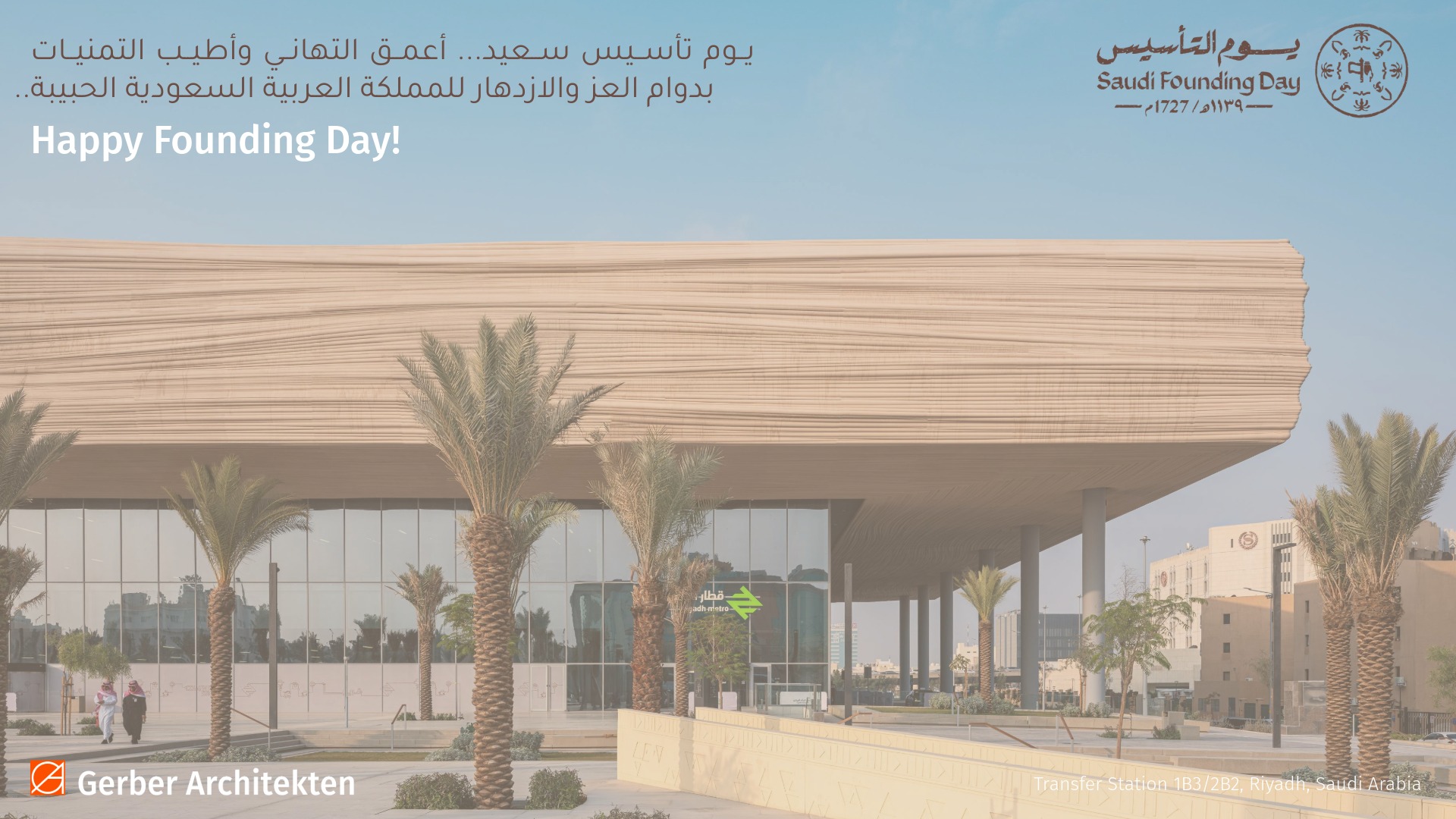
On February 22, Saudi Arabia celebrates its Founding Day – a special occasion honoring the nation’s rich history and cultural identity. Across the country, this day is marked with celebrations, traditional customs, and special events that pay tribute to the Kingdom’s origins.
We sincerely congratulate you on this important day and wish you a festive and inspiring celebration. At the same time, we would like to express our gratitude for the trustful and successful collaboration over the past year and we look forward to many more shared projects in the future.
May all your wishes come true!
MIPIM – The world’s leading property market
10-13 March 2026 – Palais des Festivals – Cannes, France
From 10 to 13 March 2026, the MIPIM, the world’s leading real estate fair, will take place at the Palais des Festivals in Cannes. Gerber Architekten will once again be represented at MIPIM in 2026 and will showcase the forward-looking flagship project King Salman Park (KSP) at the German Pavilion (Riviera Hall, R7.G38/18).
On the site of a former military airport in Riyadh, the largest park in the world is being developed – approximately five times the size of New York’s Central Park and six times larger than London’s Hyde Park. Under the guidance of the King Salman Park Foundation, an extraordinary transformation process is being implemented that will have a lasting impact on both quality of life and the environment. King Salman Park is a joint venture led by Gerber Architekten in collaboration with the specialist planners Buro Happold and Setec. The project covers a total area of 16.6 square kilometers.
Would you like to meet us at MIPIM in person?
We would be happy to arrange an appointment at our stand in advance. You can reach us by phone at +49 231 9065 0 or by email at kontakt@gerberarchitekten.de
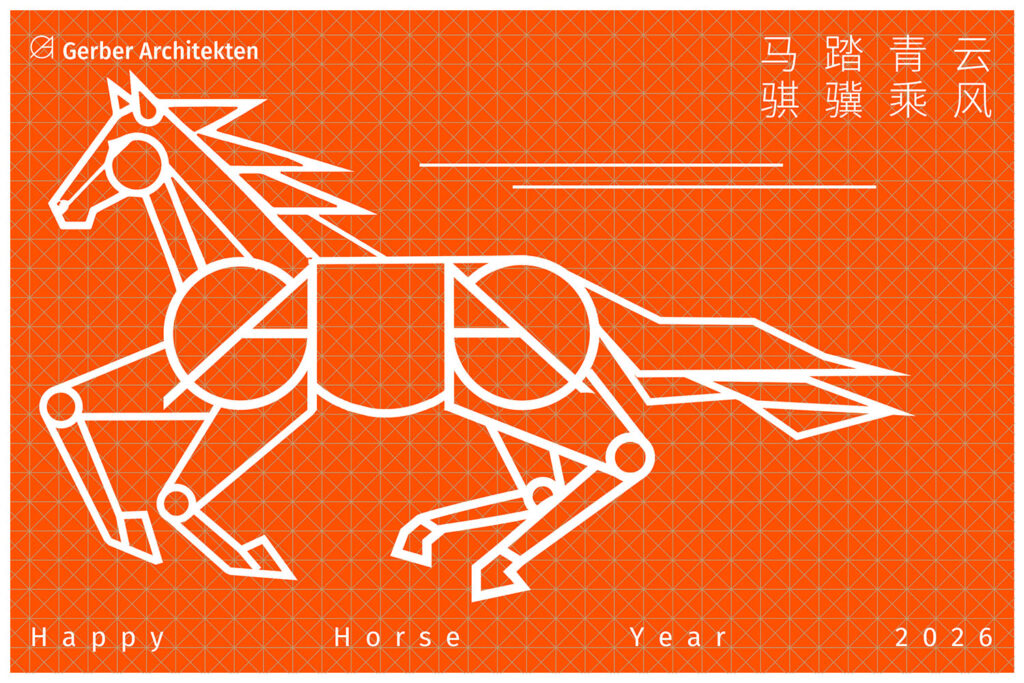
At the start of the Year of the Horse, we wish you and your families much joy, health, success, and happiness. We thank you for the trusting and successful cooperation over the past year and look forward to many exciting joint projects in the new year.
May the Year of the Horse bring you dynamism, inspiration, and positive energy!
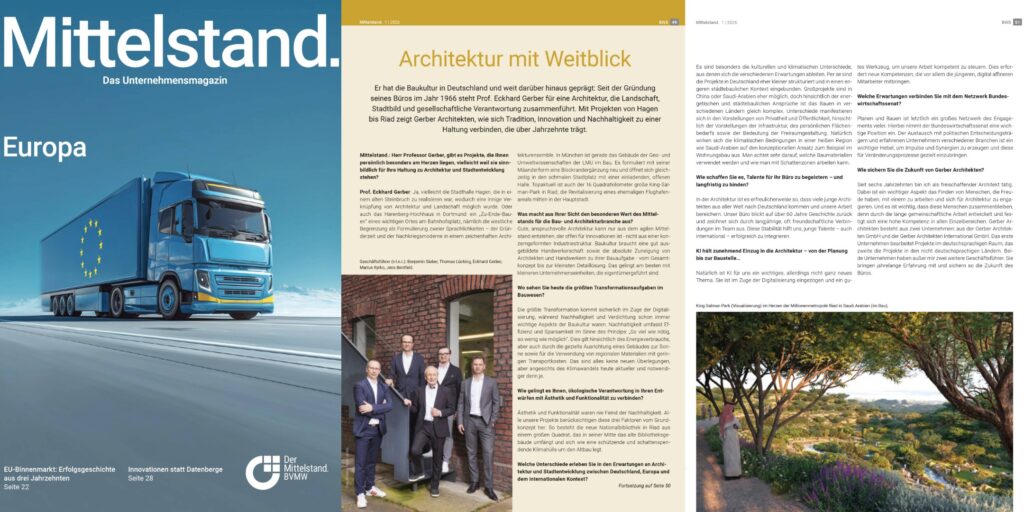
In the current issue of Unternehmermagazin Mittelstand, Prof. Eckhard Gerber speaks about the guiding principles that have shaped Gerber Architekten since its founding in 1966:
understanding architecture, landscape, urban design, and social responsibility as one coherent whole.
From Hagen to Riyadh, our projects demonstrate how tradition, innovation, and sustainability merge into an architectural attitude that endures over decades. The interview explores topics such as the responsible use of resources, the interplay between architecture and landscape, the role of digitalization, and the future of building. Another key focus is how architectural practices today can attract and retain young talent – through an open corporate culture, mutual respect, and the joy of collaborative creation.
Since 2018, Prof. Eckhard Gerber has been a member of the Economic Senate of the BVMW.
In this role, he contributes his extensive experience and perspective to strengthening the German SME sector, with the aim of promoting sustainable and future-oriented development.
The full article can be found in the current issue of Unternehmermagazin Mittelstand.
In an interview with Deutschlandfunk Kultur, Thomas Lücking, Managing Director of Gerber Architekten International GmbH, provides a personal update directly from Riyadh and offers fascinating insights into one of the most ambitious urban development projects in the world: King Salman Park in Riyadh.
The park is being created as a green oasis in the heart of the desert and represents a new form of urban quality of life. King Salman Park integrates architecture, landscape, and climate resilience into a sustainable overall concept that harmonizes nature, culture, and community. In the interview, Thomas Lücking explains how Gerber Architekten’s international planning team has incorporated Riyadh’s unique climatic and cultural conditions into the design. A central focus of his live update from Riyadh is the park’s sustainable water management. He also discusses the approximately 700 different plant species planned for King Salman Park and how they were selected to suit the climate.
At the same time, Thomas Lücking places King Salman Park within Gerber Architekten’s long-term presence in Saudi Arabia. Since completing the King Fahad National Library, we have been active in the country for 25 years, closely following Saudi Arabia’s development. King Salman Park clearly reflects the current spirit of renewal in the country, both in terms of the pace of construction and planning projects and the social and cultural transformation underway.
Thus, King Salman Park is not only a symbol of forward-looking urban development but also an expression of the importance of international collaboration in architecture. The mega-project is being developed by a joint venture led by Gerber Architekten, in cooperation with engineering partners Buro Happold and Setec.
To the interview: Oasis in the Desert – Germans Build the World’s Largest Park in Riyadh
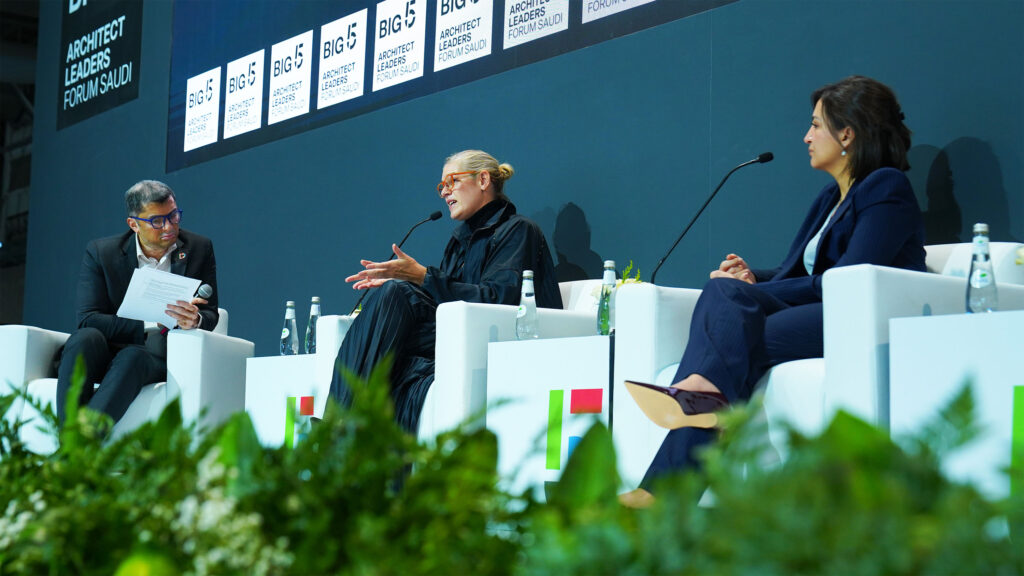
At the Architect Leaders Forum Saudi in Riyadh, one of the leading platforms for architecture, design and leadership in the context of Saudi Vision 2030, our Director of Architecture and Design, Isabelle McKinnon, joined an international panel to discuss the role of design leadership and collaboration in shaping future cities and living environments.
Drawing on Gerber Architekten’s experience with major projects such as King Salman Park, she explained that leadership today is no longer defined by individual authorship or physical presence. Instead, it is about establishing systems and processes that ensure long-term quality and consistency.
In dynamic environments such as Saudi Arabia, international teams often work closely with regional experts. By creating clear structures and fostering professional exchange, they help develop strong regional leadership capabilities. The greatest value of international collaboration is often created at the very beginning of a project: defining a shared vision, aligning systems and managing complexity.
This approach reflects what architecture fundamentally stands for. It is more than the creation of form. It is a process of understanding, problem-solving and shaping that generates social, environmental, cultural and economic value. This understanding guides our work at Gerber Architekten.
Photo: © DMG Events, from left to right: Moderator Siddharth Peters (Co-Founder, Love That Design), Isabelle McKinnon (Director of Architecture and Head of Design Guardianship), Mai Jaber (Design Manager, Omrania)
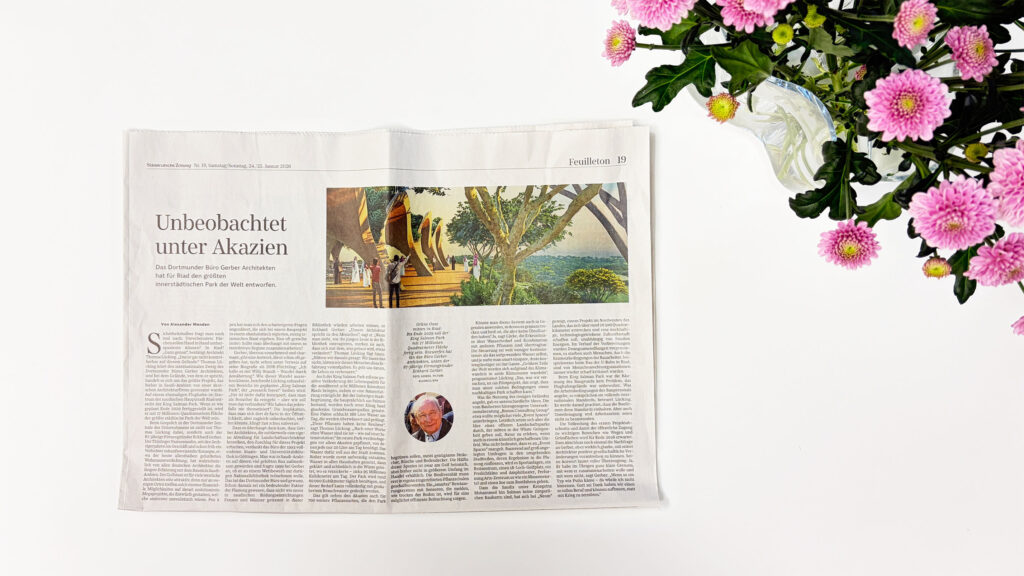
On January 23, 2026, the Süddeutsche Zeitung published an article by Alexander Menden about the King Salman Park in Riyadh, designed by Gerber Architekten. On the site of the former airport in the city centre, a landscape park of around 17 million square metres is being created, making it the largest inner-city park in the world. Completion is expected by the end of 2029.
The author explains how a location defined by infrastructure is being transformed into an open urban space that combines experiences of nature, recreation and a wide range of urban amenities. The focus is on climate-adapted planning: from the selection of water-saving vegetation and intelligent irrigation systems to the use of treated greywater, as well as the close conceptual integration of architecture and landscape.
The article also addresses the social dimension of the project and reflects on the significance of this publicly accessible park for today’s Saudi Arabia. Prof. Eckhard Gerber maintains his guiding principle for architectural work even in this megaproject, and expresses it, in reference to Willy Brandt, as “change through rapprochement.”
The full article can be found here:
LINK